


09 Mar Religious and cultural traditions during Semana Santa in Ecuador
Semana Santa in Ecuador brings a noticeable change to cities and towns across the country. Churches hold daily ceremonies, processions move through historic centers and traditional dishes appear on family tables. In 2026, Holy Week will take place from March 29 to April 5, with Good Friday on April 3. While the dates are the same nationwide, the way the week is expressed differs from one region to another.
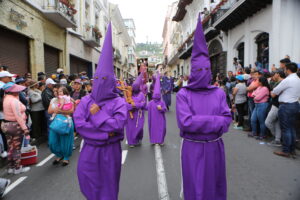
Good Friday is the most solemn day of the week within the Christian calendar, commemorating the crucifixion of Christ. In Ecuador, it is also the day when the largest processions are held. In Quito, the “Jesús del Gran Poder” procession moves through the historic center and gathers thousands of participants each year. Many walk dressed in purple robes, locally known as cucuruchos, some carrying wooden crosses as acts of devotion. The route follows key colonial streets and passes through Quito’s historic core, offering a clear and structured setting for those observing the procession.
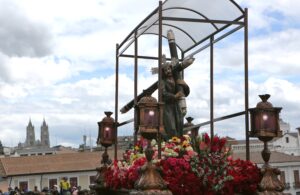
Cuenca offers a different setting. Its Holy Week program includes Via Crucis reenactments and church ceremonies held throughout the historic center. The scale is more contained than in Quito, yet the schedule of events remains well organized. The compact layout of the city allows visitors to observe the rituals while understanding their religious and historical context.
Regional variations add further depth. In towns such as Chunchi, the “Diablada” incorporates Indigenous symbolism into Holy Week traditions, portraying the tension between good and evil through dance and costume. In parts of the Andes, references to Pachamama coexist with Catholic observance, reflecting how Indigenous belief systems continue to shape religious practice today. These local expressions highlight the cultural diversity present within the same religious framework. Together, these elements create a cultural and religious experience that is distinctive within the region.
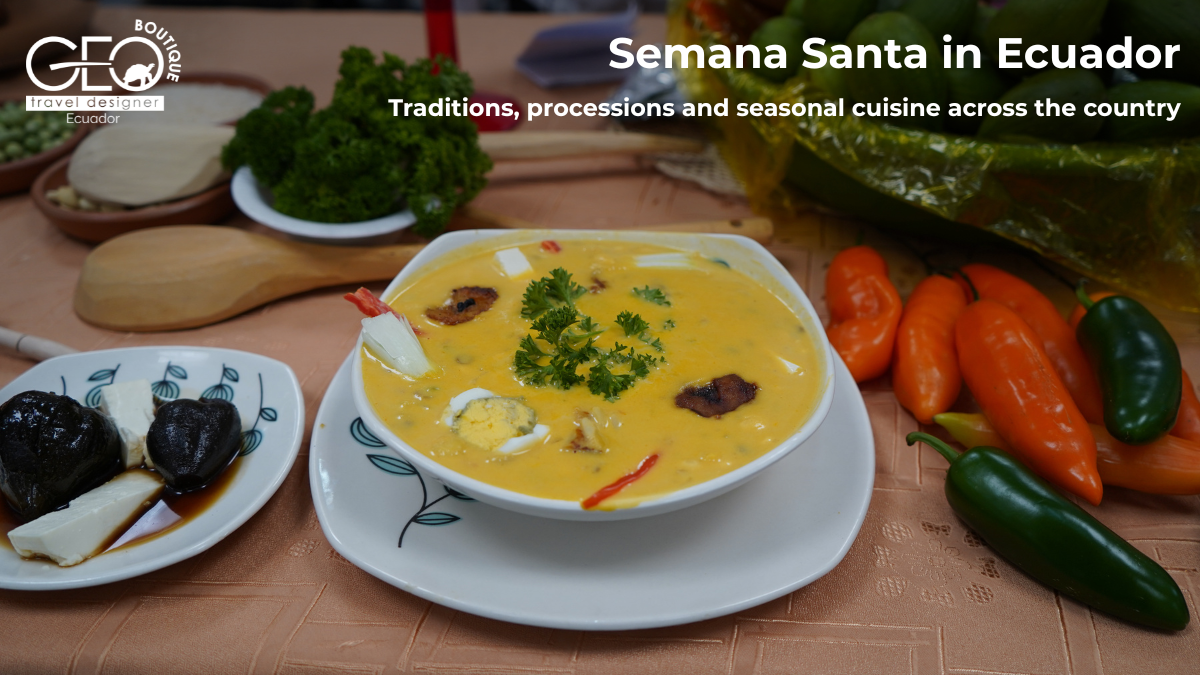
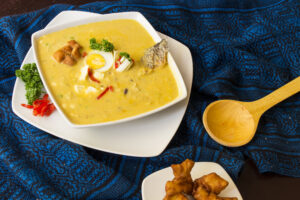 Cuisine is also central during this period. Fanesca, prepared with twelve grains and salted cod, is traditionally consumed only during Holy Week. The ingredients carry symbolic meaning linked to the apostles and to seasonal agricultural cycles.
Alongside fanesca, other traditional preparations appear on family tables during this period. In many homes, dishes based on potatoes are also common, including moro, a mashed potato preparation typically served with fresh cheese or lettuce, with slight variations depending on family traditions. Sweet desserts are also part of the meal that follows the main dish, such as rice pudding, honey-coated buñuelos or figs served with local cheese. Together, these foods reflect the seasonal character of the week and the way culinary traditions accompany religious celebrations across Ecuador.
If you are interested in further information regarding Semana Santa experiences in Ecuador, please contact fernanda@georeisen-ecuador.com. We will be pleased to provide further information.